Alam mo, ramdam talaga ng lahat ngayon na mahal ang gasolina. Isang Jerry can na 20 litro pa lang, halos kalahati na ng budget ng pamilya sa isang linggo. Kaya’t may mga anak na minsan hindi na nakakapasok sa klase. Sinasabi nila sa magulang, “Ma, wala na po akong pamasahe.” Totoo naman, pero minsan nagiging excuse na rin para makaiwas sa hirap ng biyahe. Bukod sa mga anak, ramdam din ng mga magulang ang epekto ng pagtaas ng petrolyo. May mga opisina at paaralang ginawang 4-day working week at work-from-home setup. Praktikal ito, kasi hindi na kailangang bumiyahe araw-araw. Pero siyempre, naapektuhan din ang mga plano ng pamilya. Dapat sana, bakasyon na, pero dahil mahal ang pamasahe sa barko, marami ang hindi nakaalis. Kaya pinipili na lang ang essential travel—yung talagang kailangan lang. Imbes na magbakasyon, nagluluto na lang sila ng espesyal na hapunan sa bahay. Napilitan ang mga magulang na magplano kung paano sila makakatipid at kung anong bonding ang puwedeng gawin sa bahay. Habang sabay-sabay silang kumakain ng nilutong hapunan, nare-realize nilang ang pagkakaisa ang tunay na lakas ng pamilya. Kapansin-pansin din, kahit noong Holy Week, kakaunti ang mga bakasyonista. Ang mga resort na dati’y puno ng tao, ngayon ay tahimik. At hindi lang sa bakasyon ramdam ang epekto—pati sa mga seryosong bagay tulad ng accreditation, ginagawa na lang online. Ibig sabihin, lahat nag-aadjust, lahat nagtitipid, lahat nag-iingat. At sa huli, bumabalik tayo sa kasabihang “Nasa Diyos ang awa, nasa tao ang gawa.” Oo, mahirap ang sitwasyon, pero kung marunong tayong mag-adjust, magtipid, at dumiskarte, may paraan para makatawid. Ang pagtaas ng presyo ng gasolina ay mabigat, pero hindi ito katapusan ng ating mga plano, kundi paalala na mas matibay tayo kapag nagtutulungan. Kaya kahit mahirap, basta sama-sama, kaya natin ‘to!
All posts by Miu x Sumire
Revisiting Marinduque waterways, Honoring the Writ of Kalikasan heroes: 30 years quest for Justice
Boac, Marinduque – Marinduque Council for Environmental Concerns (MACEC) has commemorated the 30thanniversary of the Marcopper mine tailings disaster with a roundtable discussion on Boac river spill on March 24 (Tuesday) from 9am to 3pm at the Sacred Heart Diocesan Pastoral Center.
According to MACEC, “this date is a somber reminder of the 1.6 million cubic meters of toxic waste that devastated the Boac river, but it is also a testament to the decades-long resilience of the Marinduqueño people.”
Moreover, “we are currently at a historic crossroads. Following the court of appeals approval of the $100 million settlement agreement with Barrick Gold Corp (Placer Dome), we transition from a season of litigation to a season of restoration. It is our collective duty to ensure the settlement is not merely a legal victory on paper, but a catalyst for the physical and ecological healing of our province.”
The objectives of the RTD are the following: to push for implementation: to establish a unified roadmap that fast-tracks the implementation of the settlement agreement to begin actual, science-based rehabilitation; to ensure transparency: to discuss that guarantee funds are managed with absolute integrity and dedicated solely to the restoration of the Boac river, Mogpog river and Calancan Bay and the source of pollution; to honor our pillars: to pay tribute to Eliza Hernandez, Mamerto Lanete and Godofredo Manoy, whose courage in filing the Writ of Kalikasan secured this path to justice.
The flow of the RTD has commenced by 8:30am with registration, 9:30am invocation and national anthem, 9:45am welcome remarks from the mayor of Boac Armi Carrion, 10:0am the MACEC executive director Fr. Arvin Madla discussed the 30 years of struggle and victory. Then there was a recognition to the heroes of the writ of kalikasan around12:30pm and onwards, legal briefing and updates, role of the multi-stakeholders oversight council with challenges to be resolved. The Sangguniang Bayan councilors and local chief executives of Boac Mayor Armi, Mogpog accountant represented Mayor Senen Livelo and Santa Cruz Mayor Marisa Red-Martinez also were able to partake and join. By 1:45pm, Diocese of Boac Bishop Edwin Panergo graced the occasion before the roadmap to rehabilitation was facilitated by MACEC chairperson. Meanwhile, the provincial governor was represented by the Provincial Legal officer Atty. Ben Cartagena also provided a message of moving forward then a synthesis, action points and resolutions by MACEC trustee. The said occasion came to a close by signing of unity statement.
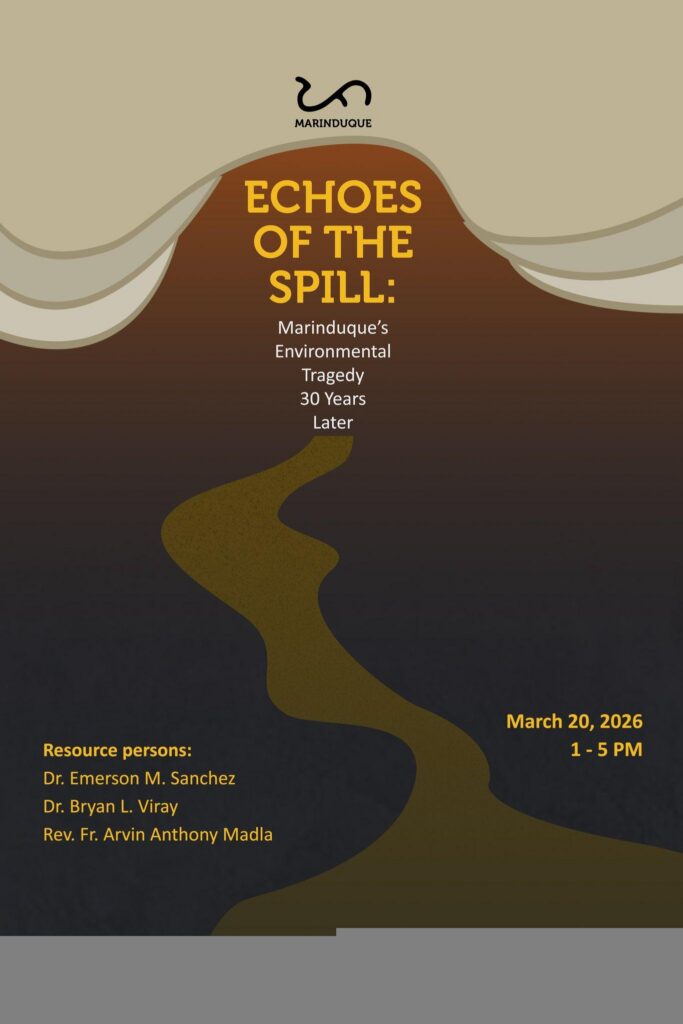
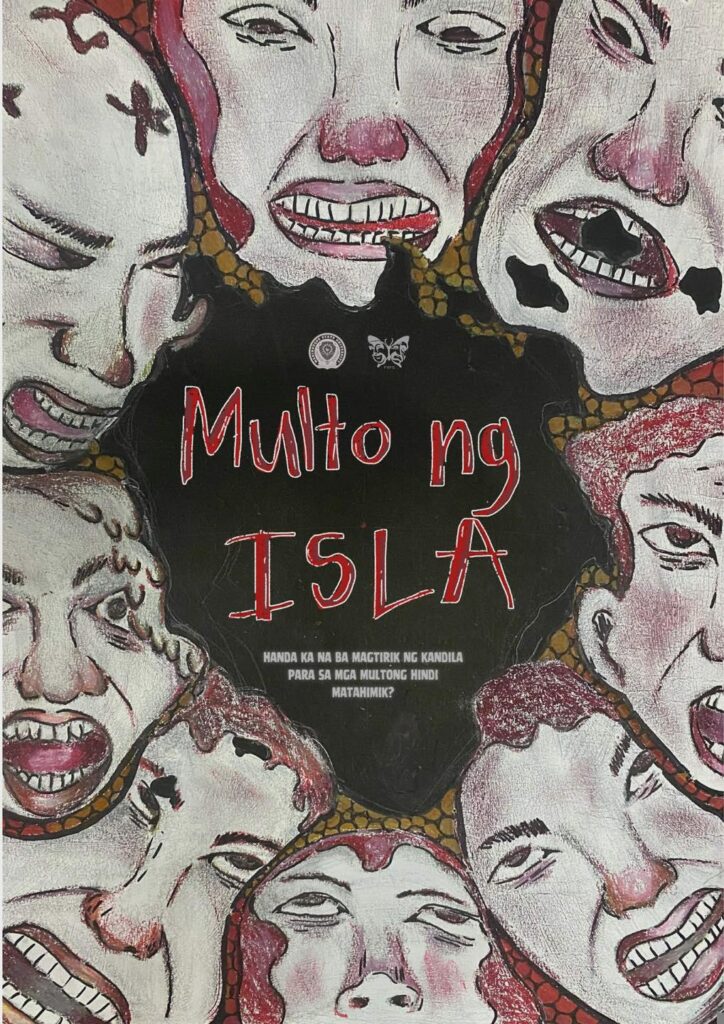
Earlier, the National Museum Marinduque-Romblon Area also hosted a discussion, “Echoes of the Spill” last March 20 (Friday) with Dr. Emerson Sanchez, Dr. Bryan Viray and MACEC executive director Fr. Madla. Meanwhile, the Marinduque State University have laso participated as reactors during the said NM event virtually with the Island Innovation academic council representative Dr. Randy Nobleza and MarSU College of Environmental Studies program head Dr. Ben Paragamac. MarSU Theater Guild would also be mounting “Multo ng Isla” on March 25 (Wednesday). It is a short play recorded in 2022 and performed last year during a research colloquium and arts appreciation culminating activity. There is also a live recorded at MarSU Sentro ng Wika at Kultura and MarSU official youtube channel.
DANUM Proceedings
The College of Arts and Social Sciences (CASS) from the Marinduque State University (MarSU) is back to face-to-face mode for a milestone edition of its Research Colloquium on October 14 to 16 at the MarSU Canopy.
With the theme, “Dalumat CASS Research Colloquium: ShowCASSing Creativity – Research and Innovation towards Social Transformation” puts out an ensemble of research from 2016 to 2024 through paper and poster presentations.
Day one offers preliminaries and opening ceremony with opening remarks from the CASS Dean Dr. Ernesto Largado and inspirational message from the vice president for research, extension and training Dr. Ma. Edelwina Blasé. The CASS Research Coordinator provides a background and rationale then would be launching the CASS Research and Extension Roadmap 2026-2030. In continuation, the BA ELS program chair Asst. Prof. Jholey Rose Lancion who was representated by the CASS Secretary Mam Sheryl Podra imparted some remarks for BA English Language Studies presenters during day 1.
On the second day, the BA Communication program chair Asst. Prof. Jerome Lingon who was represented by Mam Anna Lozada shared some words for BAC presenters for both morning and afternoon sessions. Then on the third day, the BS Social Work program chair Asst. Prof. Rosalinda Punzalan provided remarks with the BSSW presenters. There’s a spotlight for exemplary students from BA ELS, BSSW and BAC students Maria Luisa Lumanog, Pierre Denmar Gutierrez and Lorence Joshua Soto respectively.
Then to cap things off, there would be a roundtable discussion with the research professors of BAC, BA ELS and BSSW namely University Lecturer Neil Cezar Sapungan, Asst, Prof. Cherry Ann Luna and Prof. Panchito Labay. After which, there would a closing ceremony with the words of the MarSU Research director Dr. Evangeline Mandia.
The CASS Research Colloquium is also in celebration of the Museums and Galleries month this October. CASS is also celebrating its 30th anniversary since its inception in 1995 with the School of Arts and Sciences in Sta. Cruz, Marinduque.
dalumat background and rationale
Buslo ng Marinduque (BNM) is not a particularly new or just a rehash of the interdisciplinary research journal of the School of Arts and Sciences. True to its vision of serving as a platform for BA Communication, BA English Language Studies and BS Social Work research. The namesake is a Filipino word for basket, symbolizing the aggregated and curated island knowledge and knowledge. Based on the initial proposal of Prof. Panchito Labay, the Tagalog acronym is “Bunga ng mga Sinaliksik sa Loob ng Marinduque” is tantamount to results of research in Marinduque.
In addition, BUSLO also stand for “Building Understanding through Systematic Learning and Observation.” This embodies the Marinduque State University (MarSU) journey to becoming a research university though the humble contribution from the College of Arts and Social Sciences (CASS). Guided by the core principles derived from the CASS research roadmap 2026-30 that can be summed up with Island Innovation for Impact. BNM endeavors to promote local studies and scholarship, provide a platform for inter, multi/ transdisciplinary dialogue, inform policy and institutionalize innovation, conserve culture and safeguard heritage of the island and collaborate with foreign/ external scholars.
The open access journal encompasses a wide array of topics within the CASS programs such as social sciences including but not limited to sociology, anthropology, political science and economics with a focus on community development, social issues and public policy in Marinduque. Moreover, BNM is also concerned with research on social welfare, community services and interventions aiming at improving the quality of life for Marinduque islanders. In addition, there is a premium for arts and humanities by exploring Marinduque’s cultural heritage through literature, history, philosophy, visual and performing arts with cultural studies. Likewise, language and communication is a priority, studies on local languages, communication practices, media studies and the role of language in cultural identity and social interaction. At the end of the day, other fields of research including collaborative topics from education, allied medicine, business and entrepreneurship, public governance and political science, tourism, natural and physical sciences and technology incorporating island innovation for impact.
mga ilang puntong hindi napag-usapan sa round table discussion sa Dalumat kolokyum
* What makes a research study truly meaningful and relevant in the context of the arts and social sciences? (Ano ang nagbibigay ng tunay na kahulugan at kabuluhan sa isang pananaliksik sa konteksto ng sining at agham panlipunan?) Batay sa CASS research roadmap 2026-30, tunay na makabuluhan ang pananaliksik kung sa konteksto ng humanidades at agham panlipunan ay maipagpapatuloy ang nasimulang kultural na pagmamapa at imbentaryo ng pamana para maging basehan ng malikhaing kabuhayan sa isla. Tungkol naman sa Araling Pang-isla at Inobasyon, magiging mas may kabuluhan kung ikokonsidera ang parehong agham panlipunan at natural na agham upang maging salalayan ng inobasyon at matagalang epekto sa komunidad.
* What challenges do professors commonly face in sustaining research engagement, and how can institutions better support you? (Ano ang mga karaniwang hamon na nararanasan ng mga guro sa pagpapatuloy ng kanilang pananaliksik, at paano kayo higit na matutulungan ng mga institusyon?) Na-obserbahan ko, maging sa sariling danas sa huling dalawang siklo ng promosyon at bagong kalatas sa reklasipikasyon, ang nagsisilbing hamon ng mga guro sa pagpapatuloy ng pananaliksik ay ang sagad na load sa pagtuturo, administratibong gawain, pagpapalakas ng sistema ng insentibo para sa parehong siyentipiko at malikhaing saliksik. Maging ang tuloy-tuloy na repository o paglalagakan ng saliksik sa anyo ng kolokyum at paglilimbag kung hindi man paglalahad sa mga kumperensiya sa labas ng pamantasan na medyo dahop sa pondo.
* How can collaboration between Communication, Social Work, and English Studies lead to more meaningful and socially responsive research? (Paano makatutulong ang pagtutulungan ng Communication, Social Work, at English Studies sa paglikha ng makabuluhan at tumutugon sa lipunang pananaliksik?) Makatutulong ang kolaborasyon ng BA Communication, BS Social Work at BA English Language Studies sa paglikha ng makabuluhan at tumutugon sa lipunang pananaliksik. Batay pa rin sa CASS research agenda 2026-30, ang BAC na saliksik ay makapihit mula sa mass communication tungo sa social media na ekosistema. Gayundin, ang ELS na saliksik ay maka-alpas sa linggwistika tungo sa araling wika. Maging ang oryentasyon ng BSSW na may adhikain at pag-oorganisa ng mga komunidad sa isla.
* In your experience, what motivates faculty members to pursue research despite time, funding, or workload challenges? (Batay sa inyong karanasan, ano ang nagtutulak sa mga guro na ipagpatuloy ang pananaliksik sa kabila ng kakulangan sa oras, pondo, o bigat ng trabaho?) Nabanggit din sa Roundtable Discussion, sa talakayan nina Prop Panchito Labay, Neil Sapungan at Katuwang na Prop. Cher Luna, ang ilan sa karanasang nagtutulak sa mga guro na ipagpatuloy ang pananaliksik sa kabila ng kakulangan sa oras, pondo o bigat ng trabaho ay kuryosidad o pagkakaroon ng interes sa mga bagay-bagay. May ilang mag-aaral din ang sumali sa talakayan at nag-ambag imbis na nakabase sa problemang saliksik ay nakasandig sa solusyon o inobasyon. Sa huli, kung hindi katanggap-tanggap ang sitwasyon sa kasalukuyan, maaaring maghanap ng alternatiba o inobasyon bilang reporma sa umiiral na kondisyon.
*How can professors encourage students to see research not just as a requirement, but as a tool for understanding and transforming society? (Paano mahihikayat ng mga guro ang mga mag-aaral na makita ang pananaliksik hindi lang bilang requirement, kundi bilang kasangkapan sa pag-unawa at pagbabago ng lipunan?) Marahil makikita ng mga mag-aaral na higit pa sa kahingian ang pananaliksik kundi pwedeng maging kasangkapan sa pag-unawa at pagbabago sa lipunan kung ang mga propesor ay magtatanim ng mga binhi sa isipan na pwedeng baguhin ang mundo sa pamamagitan ng bunga ng saliksik na nagsisimula sa ideya, pananaw o perspektiba sa daigdig.
Sustainable Islands Course
- brief bio and professional background
- description of current work, projects in the island
- statement of motivation and expected outcomes from the course
- short video introduction
Randy Nobleza is an academic with almost 20 years of experience. He is an advocate for gender, environment, heritage and creative innovations. He’s a mentor of young creatives, innovators and changemakers. He has contributed and continues to be involved in local culture, traditions, rights of nature and heritage education. He is a facilitator for cultural mapping, heritage inventory. He was part of a technical evaluation committee for grassroots innovation, saliklakbay (saliksik-research, lakbay-adventure) immersion and solutions mapping. He was an Island Innovation Ambassador and founding representative of Island Innovation Academic Council.
At the moment, Randy Nobleza is serving the College of Arts and Social Sciences (CASS) of the Marinduque State University (MarSU) as a research coordinator. He handles courses in foreign language (Japanese), Philippine Popular Culture, Cross Cultural Communication and Introduction to Communication, Culture and Society. He has worked for the fruition of the Marinduque centennial in 2020 just before the global pandemic. He continued with the 400 founding anniversary of Marinduque’s capital town of Boac. He is a constant supporter of Union Locale, the emerging creative industries in Marinduque and the region of Mimaropa (Mindoro, Marinduque, Romblon and Palawan). He is also handling some courses in Graduate Diploma in Cultural Education (GDCE) in La Consolacion University, Philippines, Isabela State University and MarSU. He also sits in research panels, as an external panelist and reviewer of both graduate and postgraduate in Manila Business College, Philippine Women’s Unibersity, Quezon Educational College Inc and Eastern Quezon College.
In 2023, during the better half of my sabbatical I have been selected as an Island Innovation Ambassador. I took up the Islands of Innovation online course and was selected in the social innovation challenge. But during the third quarter, I was involved in a car accident with my father and wife. Luckily, we all survived. I have been a faculty scholar and received fellowships and endowment for my academic work. I feel obliged to return the favor and have a return service to my island. I believe there must be a reason for a second chance. I hope I can still continue what I have started in 2023 and prior to that in making a difference in Marinduque, the heart of the Philippine archipelago.
I am Randy Nobleza, I come from Marinduque, heart of the Ph archipelago
in 2023 I was an Island Innovation ambassador. and become a founding member of Island Innovation academic council.
But in August 20, 2023 together with my family, we met an accident in Tiaong, Quezon en route to my island. It took us at least five months to recover with head trauma, broken bones and all.
I was able to come back in July 2024, Marinduque State College was already converted to Marinduque State University.
Since September 2024 to April 2025, Department of Science and Technology (DOST Mimaropa) gave me a break to go around my neighboring islands for Grassroots Innovation for Inclusive Development (GRIND). That was my chapter of book contribution for Seas of Change and I hope it would get published soon. I hope this online course would guide me to serve my island better.
green crib spiels
“From the farm to the table” _is the concept of Green Crib, an outdoor restaurant located by the river bank in Brgy. Quatro. Standing in a half hectare farm, Green Crib was established in March 2020 with the partnership of Raul Z. Sosa, a farmer, and his daughter Marie Krisma, a chef. Surrounding the restaurant are Indian and apple mango trees whose fruits, when in season, add color to the vicinity. Adja-cent is a vineyard supported by DAR, a garden of organic vegetables, rows of pineapple plants, and more trees: jack fruit, guava, lemon, calamansi and coconut. The fruits and vegetables from the garden are served to their customers. Marie Krisma, who worked as a part time chef in Dubai, has ventured in this business as a continuation of her job abroad and her love for cooking.
malbog spiels
This natural sulfur springs is located on the edge of the Malindig volcano, a famous picnic attraction of the locales and its sulfuric waters is said to be an effective treatment for skin maladies.. Its unique location, at the heart of Southern Tagalog, creates a panorama that encompasses Mindoro, Verde Island, and Southern Luzon all the way to Bicol and Burias Island.
2 hectare-land owned by the Municipality of Buenavis-ta. The light blue colored hot water of the pool which emits a smell slightly similar to a rotten egg is from Mt. Malindig. It consists of four pools; two of them are the main spring resources which are not used for swimming. The rest of the pools are for swimming. The butterfly-shape pool with a depth of 4 feet is for adults while the other, with a depth of 2 feet is for kids. Further, there are also six cottages, two comfort rooms, a conference hall and accommodation rooms for overnight stay. Other amenities are being constructed to cater to the needs of visitors or tourists.
the 13th U.S. Infantry stricken with dysentery were transported to Buenavista, Philadelphia Medical Journal published in 1903 Dr. T.H. Weisenburg
During the Spanish and early American occupation, water from this hot spring was sold in bottles and was labeled “Agua de Boac” Agua de Carabana” and “Agua de Vichy” from Europe. At the 1904 World’s Fair in New Orleans,ang Botica de San Nicolas sa Maynila
Local Culture x History of Marinduque
Marinduque Ph Experience
Community Guide training
June 17-23, 2025
Local Culture and History of Marinduque
Marinduque centennial projects
- Marinduque local history and cultural literacy dictionary
local history
- Marinduque History 2 Storytelling and storybook package
History of Marinduque excerpts (freelipiniana)
Chapter 3 Ramon Madrigal
- Marinduque
- source of the name Marinduque
- establishment of towns
chapter 4 the town of Marinduque
- old towns
- name of the town
- the other three towns
cultural history of Marinduque perfecto mirafuente
- the hospitality in Marinduque
- Marinduque as a tagalog province
- customary practices about marriage
- superstitions and beliefs about marriage
- customary practices, beliefs and superstitions about death
- practice, beliefs and superstitions related to death and burial
- visits superstitions, practices and beliefs about visits
- myths, legends, beliefs, interpretation and superstitions
- local myths about the origin of the first man
- games and amusements
Kasaysayang Lokal: Marinduque (DepEd Mimaropa)
- Pambungad
- historiograpiya: mga batis
- konteksto
- daloy ng kasaysayan
Balangkas ng Kasaysayang Lokal: Bayan ng Boac
C. konteksto
D. daloy ng kasaysayan
II. panahon: peryodisasyon
- Mga bayani at mahahalagang tao sa kasaysayan
- mga makasaysayang pook
- toponomiya
- mga pamanang bayan (arkitektura, pagkain, damit, tradisyon atbp)
mga Kasaysayan ng Marinduque (pedro madrigal)
panimula
manga kasaysayan ng marinduque
pinangalingan ng wikang Marinduque
ang mga bayan
laban ng mga Pilipino at amerikano
Bionote RTN
Dr. Randy T. Nobleza is an Associate Professor II at the College of Arts of Social Sciences (CASS) of Marinduque State University (MarSU) where he handles courses in foreign language and cultural heritage. He earned his doctorate in Philippine Studies: Language, Culture, Media from De La Salle University (DLSU) Manila and a masters degree in Philippine Studies at the University of the Philippines (UP) Diliman.
His research interests focus on heritage conservation, cultural mapping and traditional arts. Dr. Nobleza has published a monograph series for Center of Philippine Studies at Polytechnic University of the Philippines. He also serves as a reviewer of Kritika Kultura of Ateneo de Manila University, Agos of UP Diliman Sentro ng Wikang Filipino, and Jurnal Penyuluhan of IBP (Institut Pertanian Bogor) University in Indonesia.
He is an active member of Ugat (Anthropological Association of the Philippines), PASCHR and MMAAP Mimaropa. Dr. Nobleza was selected as Island Innovation Ambassador in 2023 and among the founding members of Island Innovation academic council.
